
Tulsa, Oklahoma · Serving OK since 2001
Oklahoma's Leading Solar, Battery & EV Charging Dealer.Save With Techsico Solar.
Techsico Solar is a certified energy dealer and design-build contractor delivering commercial, industrial, and municipal solar with battery backup for Oklahoma schools and businesses that cannot afford downtime or guesswork.
Oklahoma
Born, based, and building here
Certified
Solar, storage & EV dealer
In-house
Design, install, and service
24 yrs
Serving Oklahoma
What we do
One accountable team from feasibility study to year twenty-five.
Our mission is to help our customers take control of their energy future.
We put our customers first by delivering energy solutions that reduce costs, maximize available incentives, and create long-term financial value.
Your goals. Your energy. Your savings.
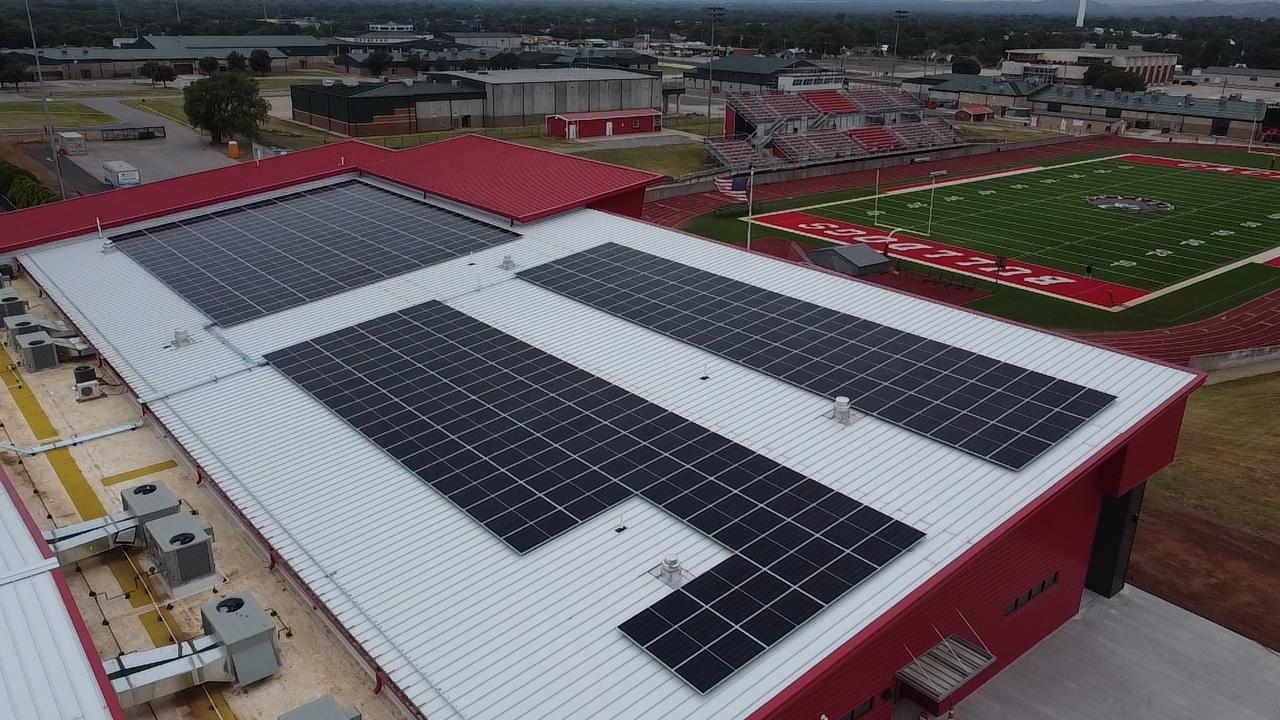
Commercial Rooftop Solar
Ballasted and attached rooftop arrays engineered around your roof warranty, structural capacity, and occupancy schedule.
Learn more →
Ground-Mount & Utility Scale
Single-axis tracker and fixed-tilt arrays from 500 kW to 20 MW, including civil works and medium-voltage collection.
Learn more →
Battery Backup & Energy Storage
Our specialty. As a certified energy storage dealer working across leading battery platforms, we size, install, and commission battery systems that keep Oklahoma facilities running through ice storms and outages.
Learn more →
Solar Carports & EV Charging
Covered parking that generates power and feeds Level 2 and DC fast charging for fleets, campuses, and retail.
Learn more →
O&M and Asset Performance
Monitoring, preventive maintenance, and rapid response that keeps fleets above modeled production year after year.
Learn more →
Engineering & Interconnection
In-house design, energy modeling, and utility interconnection management from application to PTO.
Learn more →
Why Techsico
Built like a contractor, modeled like an analyst.
Oklahoma's largest energy dealer
More installed capacity in-state than anyone else, and a certified energy dealership behind every battery we set.
Self-performed electrical
Licensed Oklahoma electricians on staff, not a rotating bench of subs. Schedule and quality stay under our control.
Data-first sizing
Every proposal starts with 12 months of interval data, not a rule of thumb per square foot.
Public-sector fluency
Bond-funded school and municipal work, competitive-bid documentation, and PSO/OG&E interconnection handled end to end.
How it works
A six-stage delivery process
- 01
Feasibility & energy audit
We pull 12 months of interval data, model consumption, and confirm roof or land capacity before promising a single kilowatt.
- 02
Financial modeling
Cash, loan, PPA, and lease options modeled side by side with ITC, MACRS, and local incentives applied to your actual tax position.
- 03
Engineering & permitting
PE-stamped drawings, structural letters, AHJ permits, and the utility interconnection application filed and tracked in one place.
- 04
Construction
Self-performed electrical with our own crews, weekly progress reporting, and a safety program built for occupied facilities.
- 05
Commissioning & PTO
Full functional testing, utility witness test, monitoring configuration, and operator training before we hand over keys.
- 06
Lifetime performance
Ongoing O&M, annual production true-ups, and warranty administration for the full 25-year asset life.
Oklahoma industries served
What clients say
Oklahoma owners who stopped guessing at their power bill.
Techsico modeled our interval data, sized the array against real load, and had the battery bank carrying our transportation depot through the first ice storm. No surprises, no change orders.
Dana Whitfield
Operations Director, Tulsa-area school district
They self-perform the electrical, so when the utility moved our witness test up two weeks, the crew just showed up. That does not happen with a stack of subcontractors.
Marcus Ruiz
Plant Manager, industrial manufacturer, Broken Arrow
Our battery system shaved peak demand charges the first full billing cycle. The payback model they gave us up front has held within a couple percent every quarter since.
Karen Ellis
City Administrator, Osage County municipality
Questions
Frequently asked
How long does a commercial solar project take?
Most 250 kW to 2 MW projects run six to nine months from signed agreement to permission to operate. Engineering and permitting take eight to twelve weeks, construction four to ten weeks, and utility interconnection is usually the longest pole in the tent.
What incentives are available right now?
The federal Investment Tax Credit plus bonus adders for domestic content and energy communities, accelerated MACRS depreciation, and direct-pay elective credits for Oklahoma schools, municipalities, and other tax-exempt entities. We model every applicable incentive against your actual position, not a generic average.
Do you handle battery storage in-house?
Yes. Techsico Solar sells, installs, commissions, and warranties battery storage systems directly rather than routing you through a third party.
Will solar void my roof warranty?
Not when it is done correctly. We coordinate with your roofing warranty provider before design, use approved attachment or ballast methods, and deliver the documentation your warranty provider requires.
Do you self-perform the electrical work?
Yes. Our licensed electricians handle AC and DC scope in house, which keeps schedule and quality under our control instead of a subcontractor's.
How does Oklahoma weather affect solar panels?
Panels are built for it. The modules we install are rated for high winds and one-inch hail at 50 mph, and racking is engineered to local wind and snow loads. Hot summer days slightly reduce panel efficiency, and that is already accounted for in our production model.
How much power will my system actually produce?
Oklahoma sees roughly 1,400 to 1,500 kWh of production per kW installed each year, so a 100 kW array typically generates about 145,000 kWh annually. We model your exact roof or ground orientation, shading, and tilt rather than quoting a rule of thumb.
How long do solar panels and batteries last?
Panels carry 25- to 30-year performance warranties and typically still produce around 85% of nameplate output at year 25. Inverters generally run 12 to 20 years, and batteries are warranted around 10 years with usable capacity well beyond that.
Send us twelve months of utility bills. We'll send back a real number.
No generic per-watt estimates. A modeled production forecast, incentive stack, and payback period specific to your facility.